
Limited Edition Prints
Every print in this collection is the result of a process built around one question: what does this image deserve?
It begins with the original film. Each photograph was made on Fujichrome Velvia 50 — a transparency stock chosen for its chromatic depth, its fidelity to the greens and blues of the Pacific Northwest, and the archival permanence of the original transparency itself. Film disciplines you in a way that digital cannot. There is no safety net of a hundred frames. You wait for the light, you make the exposure, and you live with what the film recorded.
From there, the transparency goes to Michael Strickland — one of the most respected drum scanning operators working today, and a fine-art landscape photographer in his own right. Michael scans each transparency on a Heidelberg Tango drum scanner, the gold standard for film digitization. A drum scan extracts information from the film that flatbed scanners cannot reach: shadow detail, highlight nuance, the full tonal range of the original transparency rendered as a 16-bit file with essentially no noise. The files that come back are enormous, precise, and faithful to what the film actually captured.
Those files then move through a precision color management workflow — soft-proofed, tonal-shaped, and prepared specifically for the paper they will be printed on. Nothing is generic. Each image is treated individually.
The paper is Hahnemühle Baryta Rag — a fine-art paper with a distinguished history in photographic printing, chosen for its luminous semi-gloss surface, its extraordinary tonal depth, and its archival permanence. It holds color the way the best photographic papers always have, and it ages without shift. Prints made on Hahnemühle Baryta Rag are considered museum quality, and are collected and archived accordingly.
Framing, where selected, is done using archival materials throughout — acid-free matting, conservation-grade mounting, and museum glass, which eliminates glare while providing UV protection that preserves the print for generations.
Each print is signed, numbered, and accompanied by a certificate of authenticity documenting the image title, paper, edition number, camera, film stock, and scanning provenance. Editions are limited to 25 prints per image. Artist's Proofs are designated separately, outside the numbered edition. When an edition sells out, it is closed.
It begins with the original film. Each photograph was made on Fujichrome Velvia 50 — a transparency stock chosen for its chromatic depth, its fidelity to the greens and blues of the Pacific Northwest, and the archival permanence of the original transparency itself. Film disciplines you in a way that digital cannot. There is no safety net of a hundred frames. You wait for the light, you make the exposure, and you live with what the film recorded.
From there, the transparency goes to Michael Strickland — one of the most respected drum scanning operators working today, and a fine-art landscape photographer in his own right. Michael scans each transparency on a Heidelberg Tango drum scanner, the gold standard for film digitization. A drum scan extracts information from the film that flatbed scanners cannot reach: shadow detail, highlight nuance, the full tonal range of the original transparency rendered as a 16-bit file with essentially no noise. The files that come back are enormous, precise, and faithful to what the film actually captured.
Those files then move through a precision color management workflow — soft-proofed, tonal-shaped, and prepared specifically for the paper they will be printed on. Nothing is generic. Each image is treated individually.
The paper is Hahnemühle Baryta Rag — a fine-art paper with a distinguished history in photographic printing, chosen for its luminous semi-gloss surface, its extraordinary tonal depth, and its archival permanence. It holds color the way the best photographic papers always have, and it ages without shift. Prints made on Hahnemühle Baryta Rag are considered museum quality, and are collected and archived accordingly.
Framing, where selected, is done using archival materials throughout — acid-free matting, conservation-grade mounting, and museum glass, which eliminates glare while providing UV protection that preserves the print for generations.
Each print is signed, numbered, and accompanied by a certificate of authenticity documenting the image title, paper, edition number, camera, film stock, and scanning provenance. Editions are limited to 25 prints per image. Artist's Proofs are designated separately, outside the numbered edition. When an edition sells out, it is closed.
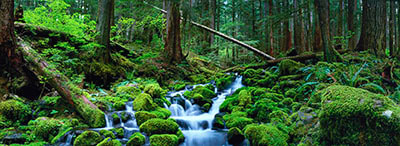
The Wild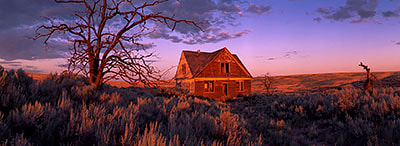
The Land |
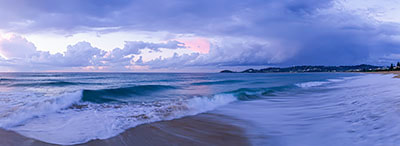
The Sea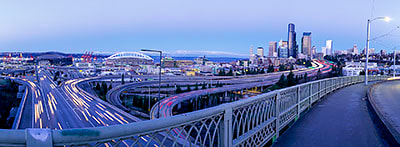
The City |
Print Specifications
Paper: Hahnemühle Baryta Rag
Source: Fuji Velvia 50 original film transparencies
Scanning: Heidelberg Tango drum scanner — Michael Strickland Images (michaelstricklandimages.com)
Editions: 25 (Artist's Proofs designated separately)
Framing: Archival materials, museum glass
Authentication: Signed certificate of authenticity with each print
Maximum print size: 78 inches on the long side
Source: Fuji Velvia 50 original film transparencies
Scanning: Heidelberg Tango drum scanner — Michael Strickland Images (michaelstricklandimages.com)
Editions: 25 (Artist's Proofs designated separately)
Framing: Archival materials, museum glass
Authentication: Signed certificate of authenticity with each print
Maximum print size: 78 inches on the long side
Pricing
Works begin at $1,800. Pricing varies by image, size, and edition availability. As editions sell, prices for remaining prints in that edition increase.
To inquire about a specific image, available sizes, current edition status, or framing options, reach out directly — [email protected]
To inquire about a specific image, available sizes, current edition status, or framing options, reach out directly — [email protected]